You've Got A Trend In Me: Iconic Duos of Art & Industry
The image of solitary genius charms us: Beethoven at his piano, Einstein running his thought experiments, whoever air-fried the first Uncrustable air-frying the first Uncrustable.
But equally charming, and much more common, is the alliance of two complementary talents. Throughout history, many of the great triumphs in art, business, and science happened when the right two people bumped into each other at the right time. And then, poof! An industry advances. An artwork becomes a multimedia masterpiece. The human experience changes forever.
You could argue the best powerhouse is a duplex. Here are three examples just from the last half-century:
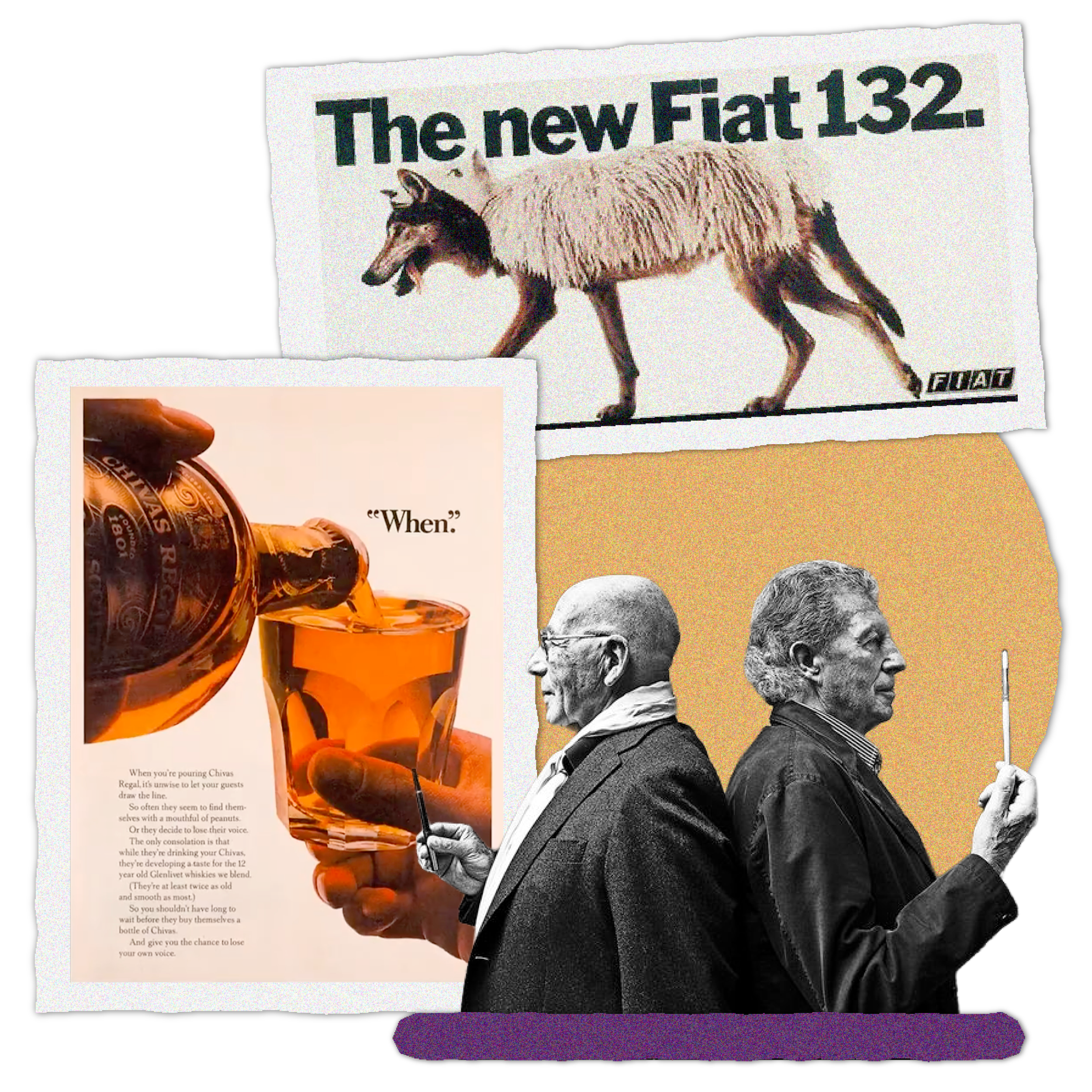
Neil Godfrey and Tony Brignull
Creative Director & Copywriter
Whether they know it or not, CSGers pay tribute to and take influence from these two every day. When Godfrey and Brignull got their start as marketers in the mid-1960s, advertising in England had not reached its full potential. By Godfrey’s recollection, it was “just a timid kind of reflection of what was happening [in America].” Most established British ad agencies had been using the same approach since World War 2, but as new firms cropped up amid the general cultural upheaval of the decade, the moment arose to redraw the boundaries of the field.
After cutting their teeth abroad, Godfrey and Brignull both landed at Collett Dickenson Pearce & Partners in London, where they worked together until the 1980s on some of the most celebrated print and TV ads of all time. Household brands, challengers, and everything in between found themselves propelled forward by a two-cylinder creative engine: Godfrey’s clear, surgical art style that often required a literal scalpel (digital typesetting being a thing of the future); and Brignull’s lyrical, conversational prose that turned body copy into headlines, aiming for a result that, in his words, might “reach out and grab you by the lapels.”
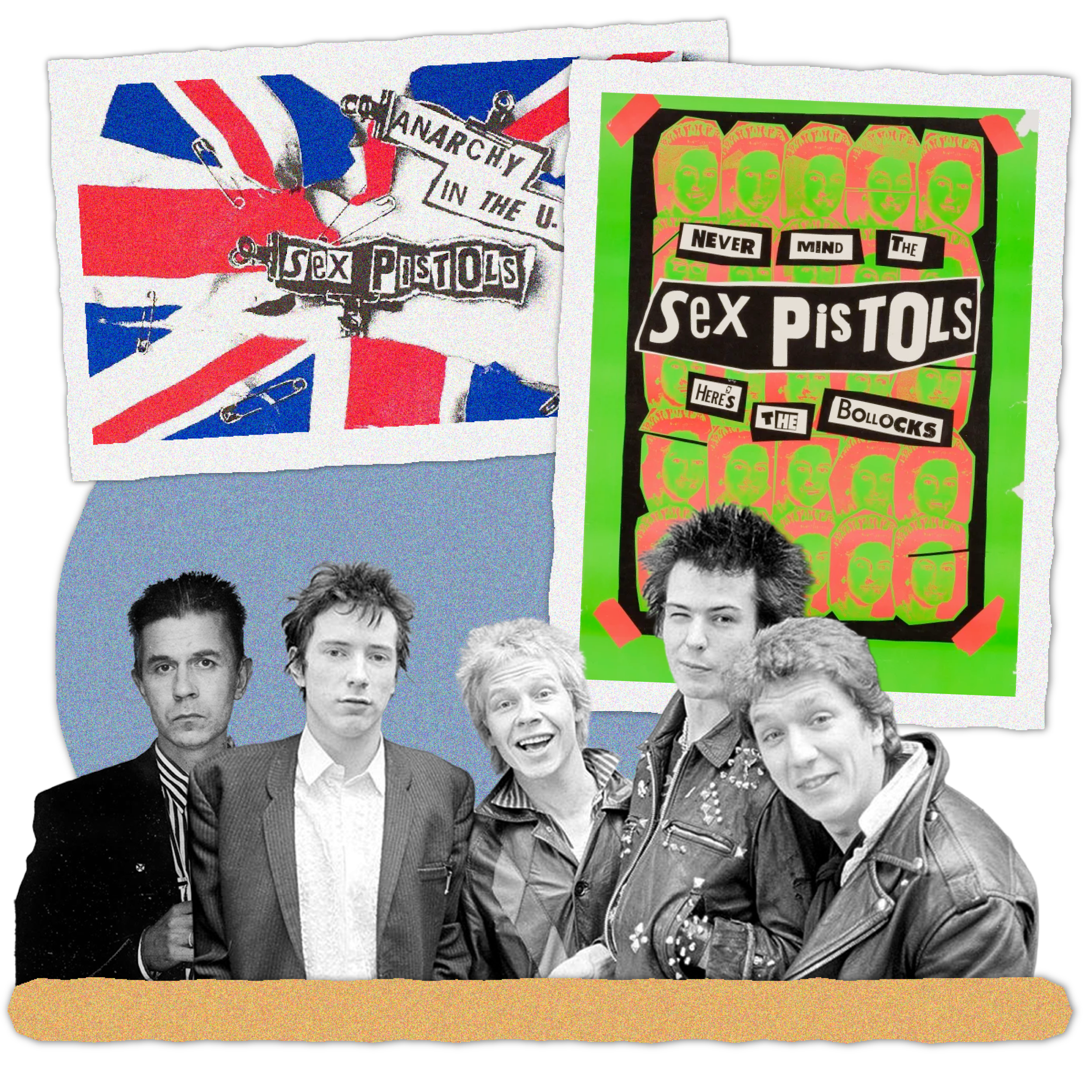
Jamie Reid + Malcolm McLaren
Visual Artist & Music Manager
Oi! Oi! Oi! Punk music emerged in the mid-1970s as a visceral rejection of the perceived excess and commercialism of mainstream rock. In the UK, the Sex Pistols became a leader in this category with their short, hyper-tempo songs, disdain for technical skill, and attitude of spectacular urgency. Years earlier, the band’s manager Malcolm McLaren had attended Croydon Art School at the same time as a talented young anarchist named Jamie Reid, whom in 1976 McLaren thought to telegraph to request a record sleeve for the band’s forthcoming single “Anarchy in the UK.”
Without ever hearing the song, Reid hit on a look and feel that instantly defined not only the band but also an entire era of the punk movement: a violent decollage with ransom note lettering and irreverent treatment of national symbols, which he would revisit to good effect in 1977 for the band’s only studio album and yet again for its second single “God Save the Queen.” That second single sleeve—which featured a portrait of Queen Elizabeth II blindfolded and gagged by the same uneven ransom note lettering—is now an icon in itself, and a monument to creative independence.
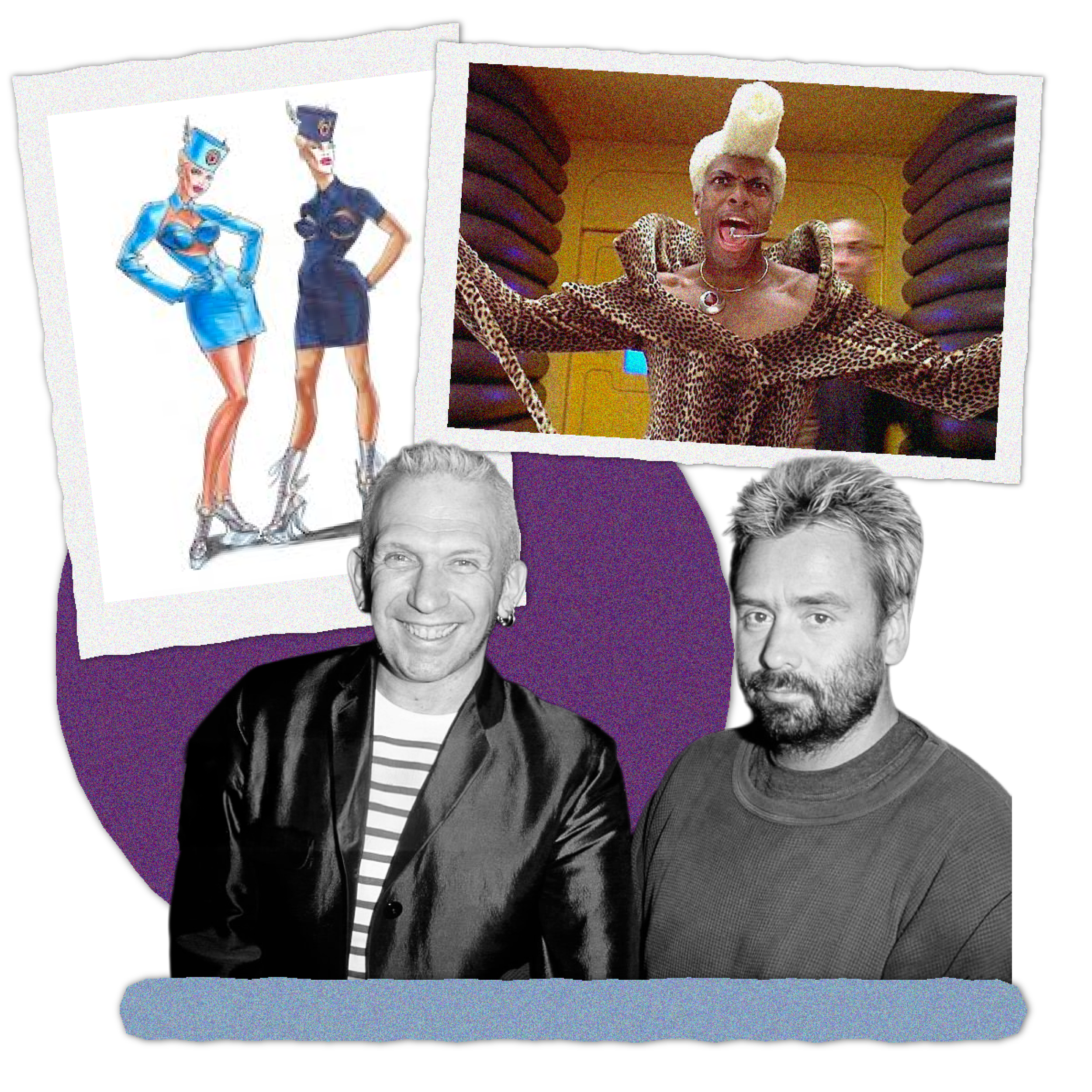
Luc Besson + Jean Paul Gaultier
Film Director & Fashion Designer
Much unlike Bruce Willis’s hairline, the collaboration between Luc Besson and Jean Paul Gaultier moved forward swiftly in the days leading up to production for the 1997 sci-fi cult-classic The Fifth Element. Besson approached the designer directly to help realize his vision of a futuristic world that was colorful, eccentric, and heavily stylized, and Gaultier jumped at the chance.
Besson had been developing the story for The Fifth Element since his teenage years; he imagined the film would invert the cold aesthetic that dominated the genre. Gaultier was a natural fit for the job, having built a reputation for challenging the norm and embracing the larger-than-life.
They produced one of cinema’s grandest costume showcases. Gaultier designed more than 900 costumes, including the “strategic bandage couture” worn by Milla Jovovich and the eyeball-befuddling jumpsuits of Chris Tucker’s character. Along with the joy of hearing Gary Oldman affect a Southern drawl, Besson’s and Gaultier’s visual language is a major part of The Fifth Element’s staying power, not to mention a goldmine of inspiration for your next Halloween ‘fit.